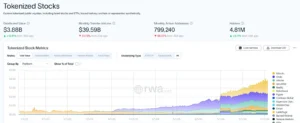
In a Convergence podcast aired on November 10, 2026, Jordi Visser argued that crypto’s next phase would need to be driven by use of its infrastructure rather than another rise in global liquidity. Visser, head of AI Macro Nexus Research at 22V Research, told host Luke Martin that autonomous AI agents could eventually create demand for stablecoin payments and tokenized assets. Those outcomes remain his forecasts, not established market trends.
The interview was summarized by Deep Tide TechFlow in a report published on November 11, 2026, at 17:41 UTC+8. Visser compared the discouragement he said he had encountered among longtime crypto participants with the years after the dot-com crash. By contrast, he said two billionaire investors had contacted him in the preceding 10 days to discuss tokenization’s implications for the dollar and stock market. The source did not identify them.
His reading of the market
Visser described Bitcoin’s move from roughly $60,000 to $69,000 as an unusually large reversal relative to its recent volatility. He also pointed to a move above the 200-day moving average and said Bitcoin had resisted making new lows despite negative news. He interpreted that combination as evidence that selling pressure was exhausted. That is his assessment, not confirmation that sellers had disappeared or that further gains would follow.
For a longer-term shift, Visser argued that liquidity growth alone could not support the much larger crypto market he envisions. He expects practical uses—including payments between AI agents and the transfer of tokenized assets—to matter more. He suggested Robinhood’s blockchain plans and round-the-clock pricing on platforms such as Hyperliquid could help connect traditional and crypto markets. He also identified private credit and real estate as possible future areas for tokenization, while acknowledging the liquidity problems those markets face.
The central question left open is whether AI agents and tokenization will produce the sustained transaction activity Visser anticipates—and which networks, if any, would capture value from it. His comparisons, market readings and projections do not establish that such adoption will occur.
Source: chaincatcher.com (originally published 2026-11-11 17:41 UTC+8)